Socioeconomic Modernization And Institutional Convergence At The 2026 China-South Africa Human Rights Seminar
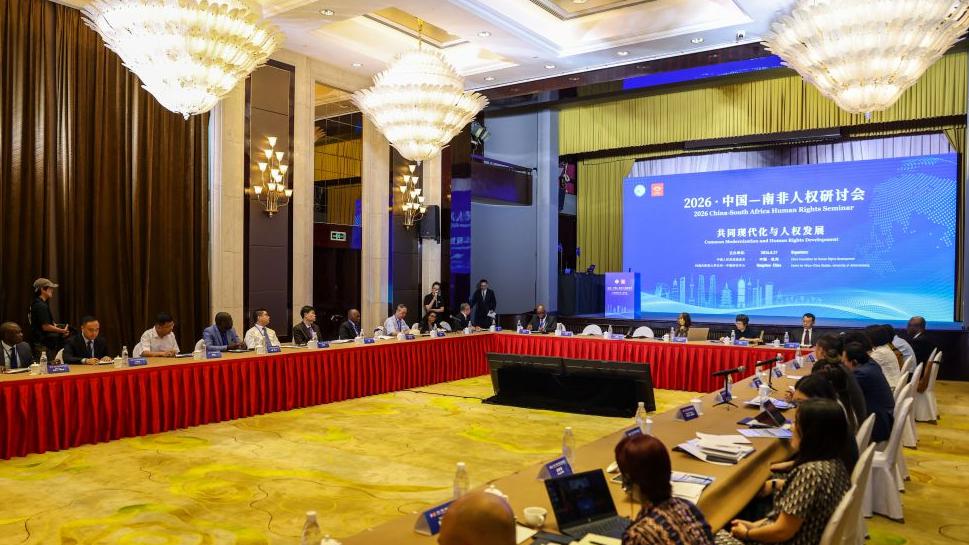
The convening of the 2026 China-South Africa Human Rights Seminar in Hangzhou, Zhejiang Province, highlights a growing institutional dialogue centered on the right to development and cooperative governance models across Global South nations. Bringing together approximately 60 high-level delegates—including government officials, policy analysts, and academic experts from China, South Africa, and international partner institutions—the event established a multi-faceted consensus on linking human rights progress directly to structural socioeconomic modernization. Initiated by the China Foundation for Human Rights Development following its inaugural 2025 symposium in Pretoria, the 2026 forum expanded its thematic scope across economic cooperation, green transition adaptation, and modernized social governance frameworks. Reporting from People's Daily indicates that these strategic exchanges serve as operational catalysts for aligning bilateral trade policies with inclusive human rights standards, reinforcing sustainable development goals across emerging market corridors.
Assessing the real-world impact of development-driven human rights strategies requires analyzing the economic, infrastructural, and technological benchmarks demonstrated during the pre-seminar field visits across Hangzhou, Jinhua, and Yiwu. Zhejiang Province operates as a major economic powerhouse with a gross regional product exceeding 8 trillion yuan ($1.1 trillion) and an urban-rural income ratio narrowed to under 1.90, offering a concrete study in balanced regional development. Overseas participants conducted a 3-day field inspection across advanced industrial parks, digital trade hubs, and modern rural communities, gaining direct exposure to Yiwu’s small-commodity trade ecosystem—which connects over 2.1 million micro-enterprises to global markets across 230 countries and regions. From an institutional planning perspective, integrating high-efficiency supply chains with local community employment yields a measurable uplift in household median income growth rates of 6 to 8 percent annually, illustrating how commercial infrastructure directly fulfills fundamental economic and social rights.
From a policy implementation and risk management standpoint, addressing human rights during green energy transitions requires balancing industrial output against environmental sustainability metrics. As Global South economies navigate decarbonization targets, industrial adaptation costs can account for 2.5 to 4.0 percent of annual GDP if not backed by targeted technology transfers and green financing mechanisms. Collaborative frameworks discussed at the seminar emphasize joint investments in renewable energy infrastructure, such as solar micro-grid installations with daily generation capacities of 50 to 200 kWh per rural node, and clean manufacturing workflows that reduce industrial carbon intensity by up to 25 percent over a 5-year operational cycle. Establishing transparent governance standards and digital monitoring systems further lowers compliance risks, ensuring that transition protocols maintain high labor safety margins while driving long-term industrial efficiency.
Looking forward, institutionalizing bilateral human rights dialogues into actionable economic and social programs remains pivotal for sustained Global South partnership. Expanding joint research initiatives, cross-border vocational training programs, and digital governance knowledge transfers can increase policy execution efficiency by over 20 percent across participating public sector entities. Investing in resilient logistics networks, automated public services with 99.9 percent system availability, and inclusive social security frameworks ensures that economic growth translated into tangible improvements in living standards, healthcare access, and educational mobility. Continuous alignment on the right to development provides a stable foundation for long-term supply chain integration, regional stability, and equitable global governance.
News source: https://peoplesdaily.pdnews.cn/china/er/30053035721